

Compression wear is defined as specialized clothing that applies controlled, graduated pressure to muscles and limbs to improve circulation, reduce muscle vibration, and speed up recovery. Unlike standard athletic clothing, compression clothing uses engineered fabrics to deliver measurable physiological effects. Research confirms that wearing compression tights during prolonged running reduces muscle damage markers like creatine kinase, which means your muscles recover faster after hard efforts. Whether you train daily or spend long hours on your feet, understanding how compression gear works gives you a real edge.
How does compression wear work?
Compression clothing works by applying graduated pressure, meaning the squeeze is tightest at the extremity and gradually decreases toward the heart. This pressure profile pushes blood upward through the veins, reducing pooling and improving venous return. The result is more oxygen delivered to working muscles and faster removal of waste products.
Your calf muscles act as a secondary pump for the cardiovascular system. Every step you take contracts the calf, pushing blood back toward the heart. Compression garments amplify this effect by adding external pressure that supports the vein walls and keeps blood moving efficiently.
The metabolic benefit is just as significant. Controlled pressure gradients accelerate clearance of metabolites like lactate and hydrogen ions from muscle tissue after exercise. Less lactate buildup means less burning sensation and faster readiness for your next set or session. Research using bioimpedance spectroscopy confirms that optimal calf-to-ankle pressure significantly speeds up metabolic recovery post-exercise.
The effectiveness of compression therapy also depends on design factors including static versus dynamic compression mode, graduated pressure distribution, and application location. A flat-knit sock and a performance compression tight are built on different principles and deliver different results.
- Graduated compression: Tightest at the ankle or wrist, decreasing toward the core
- Static compression: Constant pressure applied throughout wear, common in recovery garments
- Dynamic compression: Pressure that shifts with movement, found in advanced athletic designs
- Metabolite clearance: Accelerated removal of lactate and hydrogen ions from muscle tissue
Pro Tip: If you feel numbness or tingling while wearing compression clothing, the garment is too tight or incorrectly sized. Proper compression should feel firm but never painful.
What are the documented benefits of compression wear for athletes?
The performance and recovery benefits of compression clothing are well supported by research. Athletes across endurance and strength sports report measurable gains in both output and recovery speed.
Recovery after hard efforts
Wearing compression garments during a trail race improved countermovement jump performance by 9.9% at 48 hours post-race compared to control groups. That number reflects genuine neuromuscular recovery, not just reduced soreness. Faster neuromuscular recovery means you can train again sooner without sacrificing quality.
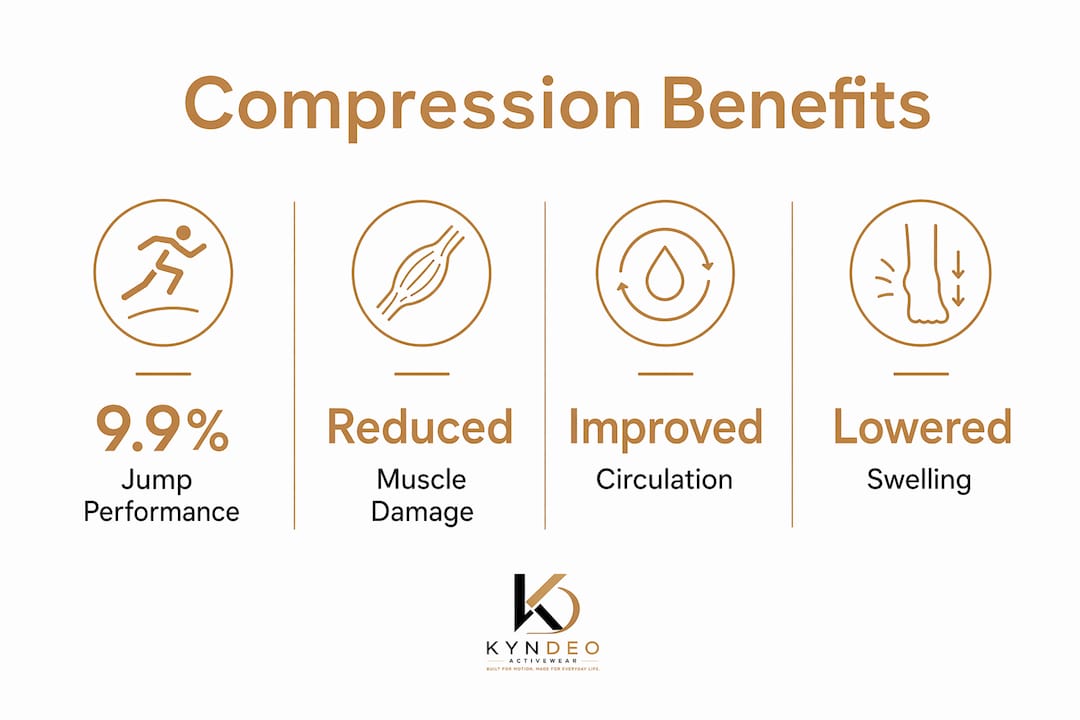
Compression tights worn during running also attenuate the rise in creatine kinase, a key marker of muscle damage. Lower creatine kinase levels after exercise indicate that muscle fibers sustained less structural stress. For athletes training multiple days in a row, this difference compounds quickly.
Everyday support and swelling prevention
Compression socks prevent blood pooling and reduce swelling in people who sit or stand for extended periods. Flight attendants, nurses, and office workers all benefit from the same mechanism that helps runners recover. The primary effect is fluid management and lymphatic drainage, which reduces the heavy, aching feeling that builds up during inactivity.
| Activity | Primary Benefit | Garment Type |
|---|---|---|
| Endurance running | Reduced muscle damage, faster recovery | Compression tights, calf sleeves |
| Strength training | Improved proprioception, muscle support | Compression shorts, shirts |
| Prolonged sitting or standing | Reduced swelling, improved circulation | Compression socks |
| Post-workout recovery | Faster lactate clearance, less soreness | Full-length tights, recovery sleeves |
Proprioception and coordination
Compression garments reduce muscle vibration and improve proprioception, which is your body’s ability to sense its own position and movement. Better proprioception means more precise movement patterns, which matters in sports requiring coordination and balance. This benefit is separate from circulation and adds a neuromuscular dimension to compression clothing’s value.
How do you choose the right compression wear?
Choosing the right compression clothing depends on your activity, pressure needs, and fit. Getting these three factors right determines whether you feel the benefits or just feel squeezed.
Pressure levels explained
Compression pressure is measured in millimeters of mercury (mmHg). Daily wear and mild athletic use typically falls in the 15–20 mmHg range. Medical-grade compression starts at 20–30 mmHg and above, used for clinical conditions like chronic venous insufficiency. For most athletes and active individuals, 20–30 mmHg delivers meaningful performance and recovery benefits without requiring a prescription.
Pressure calibration and garment design are critical for effective use. Generic compression wear may not deliver the specific pressure gradient your activity requires. Always check the mmHg rating on any garment before purchasing.
Types of compression clothing
- Compression socks and calf sleeves: Best for running, cycling, and prolonged standing
- Compression tights: Cover the full leg, ideal for endurance sports and post-workout recovery
- Compression shorts: Target the quads and hamstrings, suited for strength training and cycling
- Compression shirts for men and women: Support the core and upper body, useful for contact sports and heavy lifting
- Best compression sleeves: Target specific joints like knees, elbows, or ankles for localized support
Fit and fabric considerations
Fit is the most important factor after pressure level. A compression garment that bunches, rolls, or cuts into skin is not delivering graduated pressure correctly. Look for flat seams that sit flush against the body, moisture-wicking fabrics that breathe during high-intensity work, and four-way stretch construction that moves with you rather than against you.
Pro Tip: Size compression garments by body measurements, not clothing size. Most brands provide measurement charts for the calf, thigh, or chest. Using the wrong size is the most common reason athletes feel no benefit.
When and how should you wear compression gear?
Timing your compression wear correctly matters as much as choosing the right garment. Wearing it at the wrong time reduces its effectiveness and can cause skin irritation.
- During exercise: Wear compression tights or sleeves during runs, rides, or gym sessions to reduce muscle vibration and improve proprioception in real time. This is most effective for endurance activities lasting more than 45 minutes.
- Immediately post-workout: Put compression garments on within 30 minutes of finishing exercise to support lactate clearance and reduce inflammation while your body is still in active recovery mode.
- During prolonged inactivity: Wear compression socks on long flights, road trips, or desk-heavy workdays to prevent fluid buildup and reduce leg fatigue.
- Remove at night: Experts recommend removing compression socks at night and elevating your legs to allow skin to breathe and prevent moisture buildup. Continuous 24/7 wear risks skin irritation and reduces the garment’s effectiveness over time.
- Wash after every use: Compression fabrics lose elasticity when oils, sweat, and bacteria break down the fibers. Hand washing or using a delicate machine cycle extends the life of the garment and maintains its pressure profile.
The most effective routine pairs compression wear with active recovery practices like hydration, light movement, and sleep. Compression clothing supports these processes but does not replace them.
Key Takeaways
Compression clothing delivers measurable performance and recovery benefits when the right garment is worn at the right time with the correct pressure gradient.
| Point | Details |
|---|---|
| Graduated pressure drives results | Tightest at the extremity and decreasing toward the heart, this profile improves venous return and metabolite clearance. |
| Recovery gains are documented | Wearing compression tights during exercise improved neuromuscular recovery by 9.9% at 48 hours post-race. |
| Pressure level must match your use | Daily wear suits 15–20 mmHg; athletic recovery and performance benefit from 20–30 mmHg. |
| Timing affects effectiveness | Wear during exercise or immediately after for best results; remove at night to protect skin health. |
| Fit determines function | Size by body measurements, not clothing size, and look for flat seams and four-way stretch fabrics. |
What I’ve learned from years of watching compression wear evolve
Most athletes approach compression clothing the same way they approach supplements: they try it once, feel nothing dramatic, and write it off. That reaction almost always comes from wearing the wrong pressure level or the wrong garment type for the activity.
The research is clear that generic compression wear may not deliver clinical-level recovery benefits. The pressure gradient between calf and ankle has to be calibrated correctly for lactate clearance to accelerate. A $15 pair of compression socks from a gas station shelf is not the same product as a graduated 20–30 mmHg athletic tight. The category name is the same. The mechanism is not.
What I find genuinely underappreciated is the proprioception benefit. Most people focus on circulation and soreness reduction. But the improvement in body awareness and movement coordination that comes from wearing a well-fitted compression shirt or tight is real and immediate. You feel more connected to your movement. That matters whether you are lifting, running, or just moving through a long day.
The other thing worth saying plainly: compression clothing has gotten dramatically better at combining function with design. You no longer have to choose between a garment that works and one that looks good. The best options today move with you, breathe well, and hold their pressure profile through dozens of washes. That combination is what makes compression clothing worth building into your regular routine, not just pulling out for race day.
— Bryan
Performance-ready compression from Kyndeoactivewear
Kyndeoactivewear builds activewear that is designed for the full pace of real life, from morning training sessions to afternoon errands to evening plans. The women’s activewear collection and men’s activewear collection include stretch-fitted leggings, compression-ready tights, and coordinated sets built for movement and made to last.

Kyndeoactivewear is a Black-owned brand committed to clothing that performs as hard as you do. The sustainable activewear line pairs performance fabrics with responsible production, so every piece you wear reflects both your values and your effort. Built for motion, styled for life.
FAQ
What is compression wear and how does it work?
Compression wear is specialized clothing that applies graduated pressure to muscles and limbs to improve blood circulation, reduce muscle vibration, and speed up recovery. It works by supporting venous return and accelerating the clearance of metabolites like lactate from muscle tissue.
What mmHg level should athletes use?
Most athletes benefit from 20–30 mmHg for performance and recovery use. Daily wear and mild support typically falls in the 15–20 mmHg range, while clinical conditions require 30 mmHg and above under medical guidance.
Can you wear compression clothing all day?
Compression clothing is safe for extended daily wear, but experts recommend removing compression socks at night to allow skin to breathe and prevent moisture buildup. Continuous 24/7 use can cause skin irritation and reduce garment effectiveness.
Do compression tights actually improve athletic performance?
Research shows that wearing compression tights during exercise reduces creatine kinase levels, a marker of muscle damage, and improved neuromuscular recovery by 9.9% at 48 hours post-race compared to athletes who did not wear them.
What is the difference between compression socks and compression tights?
Compression socks target the foot, ankle, and calf, making them ideal for running, prolonged standing, and travel. Compression tights cover the full leg and deliver broader support for endurance sports, strength training, and post-workout recovery.